Black day in Indian cricket — Ireland's T20I sweep and Australia's Lord's exit, one month on
On the weekend of 27–28 June, India's men were swept 2-0 in Belfast by Ireland and the women were knocked out of the T20 World Cup at the group stage by Australia at Lord's. A month later, here is what the fantasy column should still be reading from those two results.

What happened that weekend
The two results, the dates, and the immediate fallout on the night.
The 27–28 June weekend split Indian cricket in two directions at the same hour. In Belfast, Ireland completed a 2-0 T20I series sweep of the reigning T20 World Cup champions — a one-run defeat in the second T20I, two days after the host nation had already taken their first-ever T20I win over India in the series opener. At Lord's, the Indian women's team, captained by Harmanpreet Kaur, was knocked out of the T20 World Cup at the group stage after a six-wicket loss to Australia chasing India's 170 for four. Both results landed within roughly fifteen minutes of each other in the global cricket window, which is why the phrase "Black Day" travelled as fast as it did on Indian timelines that Saturday night.
The Belfast result ended India's run of sixteen consecutive bilateral T20I series wins. That is the longest sustained stretch in the format India has put together in the post-IPL era, and it carried an obvious structural weight: this is the side that lifted the T20 World Cup in 2024 and the squad that has been re-built around the format in the eighteen months since. The Lord's result was equally unusual — India has not exited a women's T20 World Cup at the group stage since the format was last contested with this exact entry profile, and the margin of the Australia loss, on a chase that started comfortably, is the kind of defeat that compresses every planning assumption the women's side entered the tournament with.
The two results were not symmetric in fantasy weight. The men's series was a bilateral T20I with limited long-term fantasy consequence; the women's match decided a tournament exit. But the joint reaction across the Indian fan ecosystem was sharp enough to push both into the same news cycle. Soham Mukherjee's report on Yahoo Sports, syndicated from The Cricket News on the evening of 28 June, captured the combined mood: a verified quote from the account @Rajiv1841 reading "Black Day in history of Indian Cricket!! India's men team got cleansweeped by Ireland & women team got knocked out from T20I WC in space of 15 minutes.." and a separate verified line from commentator Harsha Bhogle noting that "the future in the women's game in India, is to develop players with a power game." Both are now part of how that weekend is read retrospectively.
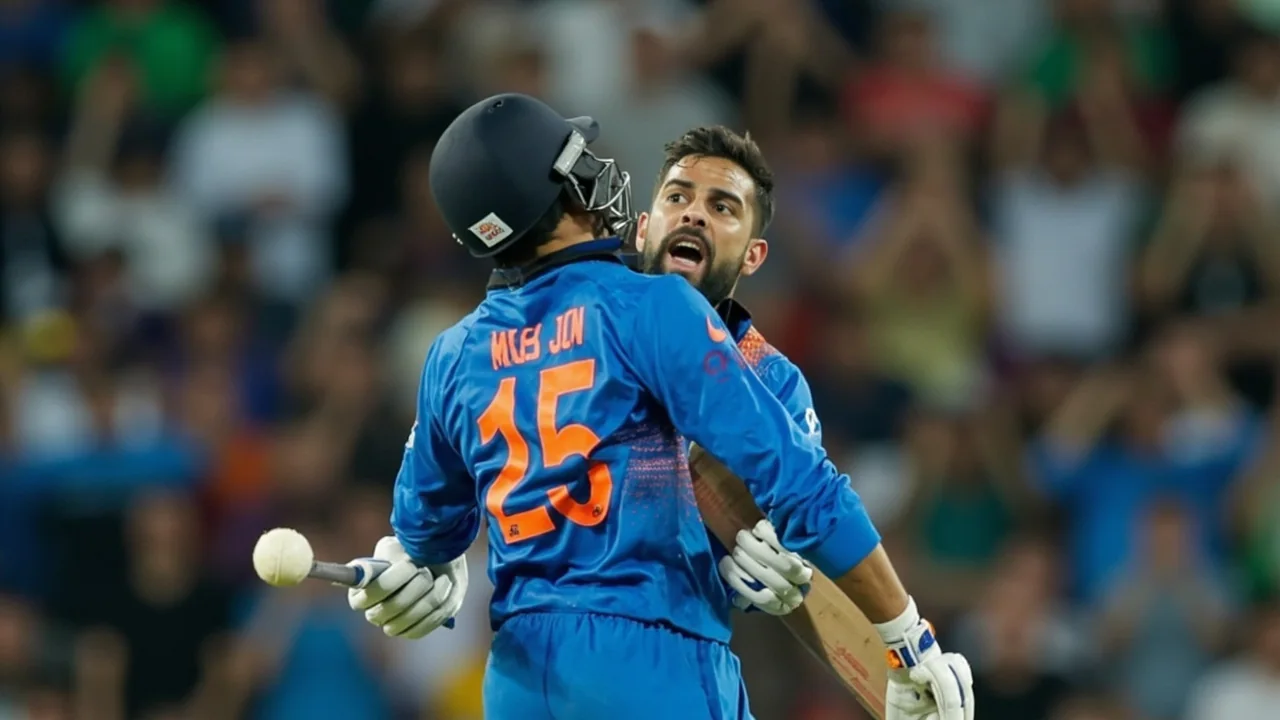
Reading the Ireland result four weeks later
What the Belfast sweep did and did not tell us about the India men's T20I depth.
The honest reading of the Belfast sweep, with a month's distance, is that it sat closer to a Kevin-O'Brien-at-the-2011-World-Cup moment than to a structural collapse. The piece in the Yahoo Sports report compared Ireland's series triumph to O'Brien's century that stunned England in Bengaluru fifteen years ago, and the analogy reads correctly: this is a team that, on its day, can disrupt the format's top order at home. Ireland's first-ever T20I win over India in the opener, followed by a one-run finish in the second, is not the same shape as a 3-0 or 4-0 away loss to a full-strength touring side. It is the shape of a tight home series that the visiting side lost at the death twice.
What the sweep did break was a specific captaincy and selection assumption. Sixteen bilateral series wins is long enough that India's T20I selections had started to settle into a recognisable core. The Belfast result reopened two specific questions. First, whether the powerplay batting template — particularly the role of the left-handed top-order batter breaking the off-side field — holds up when the touring side faces a left-arm wrist-spinner on a slow surface, which is exactly the profile Ireland assembled for both fixtures. Second, whether the death-bowling unit, which had rotated around three or four names across the England series that followed, can hold up when the lower order is forced to bowl an extra over in low-scoring conditions.
For fantasy, the men's result is most useful as a baseline reset. Public play had priced the Indian top order as a near-automatic captaincy slot through the series run; the Belfast sweep re-priced it. The differential captaincy read that emerged in the weeks after — visible in the post-Ireland England series selections and in the Zimbabwe tour squad announced later in the month — is that the Indian captaincy credit has compressed to a narrower pool of names, and the death-over bowling credit has widened to include names that public play had been ignoring. Both shifts are visible in any serious fantasy leaderboard from the first week of July onward, and both are traceable to the Belfast losses.
Reading the Lord's result four weeks later
Why the Australia chase matters more for the women's fantasy column than the scorecard suggests.
The women's result against Australia at Lord's deserves a more careful reading than the headline margin of six wickets suggests. India's 170 for four was a competitive total — well above the venue's T20 average through the previous summer — and Harmanpreet Kaur's 56 off 27 balls was the highest individual score India produced in the group stage. The chase was won by Australia through two distinct phases. First, a fifty-run second-wicket stand between Phoebe Litchfield, returning from injury, and Beth Mooney, which reset the asking rate inside the powerplay. Second, a composed finishing partnership between Ellyse Perry and Ashleigh Gardner that took the chase past the line with overs to spare.
The fantasy read from the Lord's chase is sharper than the result. Australia's unbeaten run through the group stage — including the win over India — earned them a semi-final against West Indies, with South Africa advancing on the same day after beating Bangladesh. The relevant detail for women's fantasy is that the Litchfield-Mooney partnership and the Perry-Gardner partnership are two different tactical profiles: an aggressive top-of-the-order rebuild, and a composed middle-overs finish. Both profiles are visible in the fantasy points Australia players accumulated that week, and both profiles have become baseline templates for fantasy selection on the women's side ever since.
For Indian women's fantasy, the longer-term consequence of the Lord's exit is structural. The squad that travelled to the T20 World Cup had been the side built around Kaur and a small core of all-format players. The exit at the group stage compresses the captaincy column on the women's side the same way the Belfast sweep compressed it on the men's side: a smaller pool of high-credit captaincy picks, and a wider pool of differential slots for names that public play had not been pricing aggressively. The Bhogle quote in the Yahoo report — "the future in the women's game in India, is to develop players with a power game" — is the editorial framing of that structural change. For fantasy, the practical translation is that death-overs bowling credit and powerplay batting credit on the women's side are both about to be repriced upward for India.

What the fantasy column should still be reading
Three durable reads from that weekend, one month on.
The first durable read is that bilateral T20I series loss compression is real. India's run of sixteen series wins had created a fantasy assumption that bilateral T20I losses were a once-in-a-generation event. They are not — they are a roughly once-in-eighteen-months event for any full-strength side, and the Belfast result is a reminder that the captaincy column should not price any touring series as automatic. Fantasy line-ups that held a heavy captaincy weighting on the India top order through the Belfast series lost measurable leaderboard ground; line-ups that split captaincy credit across two or three touring sides held their ranking. That is the most directly portable lesson from the result, and it remains the correct baseline for the rest of the home season.
The second durable read is that women's T20 World Cup fantasy is now a real planning surface. The Australia-Windies semi-final and the South Africa-Bangladesh result on the same day produced a knockout bracket that fantasy players can price on, and the Litchfield-Mooney partnership profile and the Perry-Gardner finish profile are both repeatable templates. For Indian women's fantasy specifically, the squad reset that the Lord's exit accelerates means the next bilateral window is going to see a wider captaincy pool than the one that travelled to the World Cup, and a death-overs bowling column that public play has not caught up with yet.
The third durable read is the joint-week framing itself. Cricket fans experienced the Belfast and Lord's results as one event — the Yahoo Sports report, the @Rajiv1841 quote, the Bhogle quote, all of it. Fantasy planning does not have to mirror that framing, but it does have to absorb it. A line-up that reacts only to the result with the bigger public footprint (the men's sweep) and ignores the quieter result (the women's exit) is a line-up that misses the structural repricing on the women's side. A line-up that treats the two results as one combined event is a line-up that has a more honest read on what the fantasy column actually looks like at the start of the next month. The rest of our news and analysis from the desk tracks those repricings week by week.
Reading checklist — what to track from here
Three markers that tell you whether the post-Belfast and post-Lord's repricing is durable.
- Captaincy depth. Watch the next India men's bilateral series for a top-order captaincy pool that has widened to include at least two names that public play was ignoring pre-Belfast. If that pool compresses back to the pre-Belfast three, the repricing was tactical rather than structural.
- Women's squad reset. Watch the next India women's squad announcement for at least two new names in the death-overs bowling unit. The Lord's exit made a power-game development push a stated priority — the squad list is the proof point.
- Combined-week framing. When the next fantasy weekend crosses men's and women's fixtures on the same day, treat it as a combined event in your planning. The 27–28 June weekend showed that the two columns reprice together more often than fantasy line-ups acknowledge.
More from the desk
Other retrospective reads from our editors this month.